October 3, 2026
ADA Compliant Available Mobile Bathrooms: Compliance Tips Based on Federal Rules
By @devinfulv025
If you rent mobile toilets for an event, public event, municipal site, church event, college function, or private location open to the public, ease of access is not a side problem. It forms whether guests can make use of the website with self-respect, whether staff spend the day addressing preventable issues, and whether the coordinator has in fact met federal assumptions as opposed to thinking they have.
I have actually seen this fail in really regular ways. A group orders one bigger system and really feels eased that they examined the box. Then it gets to the edge of a crushed rock lot with no stable path, a lip at the access, and an additional common system parked so near to the door that developing into it comes to be awkward or difficult. On paper, they rented an ada portable toilet. In practice, they produced an additional obstacle.
That void in between ordering and true functionality is where most problems live.
The federal standard right here comes from the 2010 ADA Criteria for Accessible Style, as interpreted by the Division of Justice and the Access Board. Those guidelines matter for portable toilet configurations equally as long as they provide for long-term centers. And when the setting is short-term, that does not make accessibility optional. Temporary events still have to obtain this right.
The regulation lots of people miss out on first
For collections of mobile single-user commode systems, a minimum of 5 percent of the devices in each collection must come. The Accessibility Board has actually made clear that this uses also at short-term events.
That one sentence lugs more weight than several occasion organizers realize. Words "collection" matters. If you spread units across a big site in different groups, you must believe in regards to each group, not just the overall matter for the whole residential or commercial property. A solitary ada certified portable toilet placed in one remote corner might not fix availability concerns for the various other bathroom banks people are really using.
This is one factor a casual technique triggers difficulty. People tend to count all units on the website, divide by twenty, and stop there. Federal scoping is much more functional than that. It focuses on the real cluster being used. If one toilet area has a row of units near the entryway and one more row near the food solution area, accessibility requires to be considered in each of those areas.
Even when a customer asks for "one handicap unit," I constantly urge them to shift the discussion. The question is not whether there is a bigger system someplace. The real inquiry is whether each collection consists of the appropriate variety of easily accessible units, properly placed and actually usable.
"ADA accessible" is not just a larger box
A great deal of individuals make use of expressions like ada available mobile bathroom or ada handicap accessible portable restroom as if they only explain size. Federal rules are extra requiring than that.
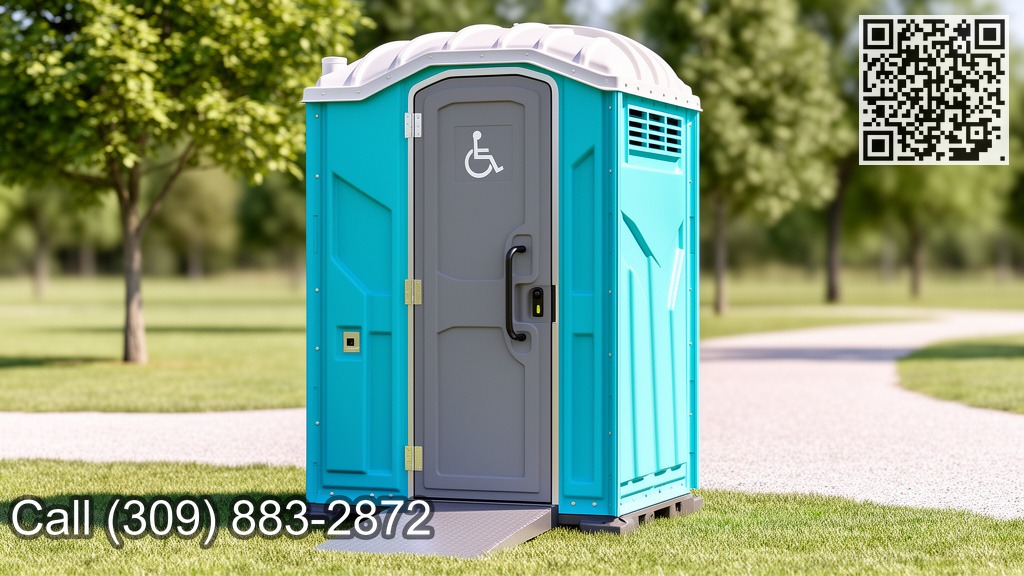
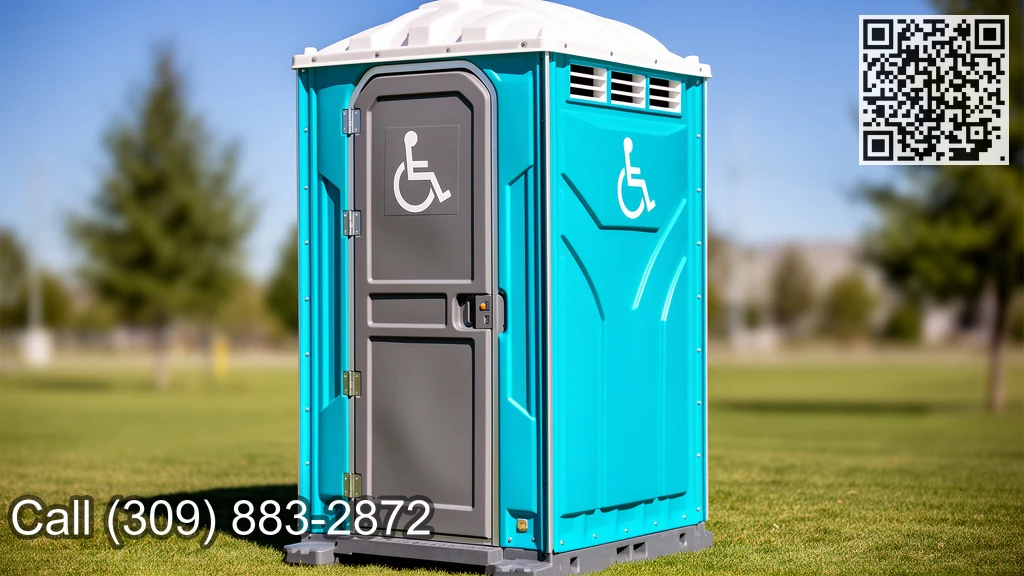
An easily accessible portable commode system should be identified with the International Sign of Ease Of Access. It likewise must have an obtainable course and entry. If ramps or touchdowns are needed, those components have to adhere to ADA technological needs. Past getting involved in the system, the mobile bathroom itself needs to satisfy toilet-room technological requirements, consisting of fixture clearances, transforming area, door steering clearances, and applicable policies for grab bars and water-closet clearances.
That is a significant difference. A roomy inside alone does not make a device certified. Neither does a sales label. Neither does a vehicle driver stating, "This is our ADA design."
In actual job, one of the most trustworthy routine is to deal with access as a chain. If one web link stops working, the individual experience stops working. A correctly made ada certified mobile restroom comes to be nonfunctional if the route to it is hard to reach. A correct path does not assist if the device lacks the best inner clearances. And even a practically proper device can become awkward if positioning blocks the door swing or maneuvering area.
The path is where lots of setups fail
This is most likely one of the most typical area error since it is so normal. The unit itself shows up compliant, yet the ground conditions or bordering layout undo that compliance.
Portable washrooms typically get positioned where there is space, not where there is access. That may indicate a soft verdant shoulder after rainfall, loose crushed rock, a slope that feels workable to able-bodied personnel yet not to wheelchair customers, or a route interrupted by hose pipes, short-lived fence, cables, or crowd-control barricades.
Federal guidelines need an obtainable route and entry. That indicates the course is not an afterthought. It belongs to the requirement. If you need a ramp or touchdown, that ramp or touchdown has to follow ADA technical standards too.
This is where intending early settles. By the time vehicles are backing in and suppliers are staking their areas, the best available places are commonly gone. The available unit then obtains squeezed right into whatever room continues to be, which is precisely how you end up with a nominally certified system offering a noncompliant website condition.
An easy mental examination aids. Picture a visitor getting here independently, without aid, in a wheelchair device. Can they get to the unit, approach the entrance, open and use the door, maneuver inside, and departure without someone improvising a repair? If not, the configuration likely needs work.
Placement matters as much as procurement
I have viewed knowledgeable website crews invest lots of money on ada-compliant portable washrooms and still develop troubles due to positioning. Sometimes the problem is crowding. Sometimes it is grade. In some cases it is inadequate distribution throughout a website. Normally it is a mix.
If you are organizing an ada mobile bathroom rental, the rental order must never be the last availability choice. It is one step in a larger strategy. You also require to choose where the easily accessible units belong, just how they will be approached, what surface areas lead to them, and whether neighboring objects disrupt use.
The placement discussion ought to happen with the same seriousness people give power, water, deliveries, and emergency access. Mobile sanitation has a tendency to get pushed throughout of preparation, and accessibility gets pushed to the end of hygiene preparation. That sequence triggers avoidable mistakes.
One valuable approach is to stroll the site before the shipment date, determine every restroom cluster, and select the available area first. Afterwards, build the rest of the cluster around it. When groups do the reverse, the available device comes to be whatever can still fit, which is seldom the best answer.
Temporary occasion does not indicate short-lived responsibility
Some organizers still assume that because an occasion only lasts a day or a weekend break, federal ease of access requirements kick back. That is not how the regulation functions here. The Gain access to Board has especially stated the 5 percent accessible-unit requirement uses also at momentary events.
That issues for fairs, races, public parties, seasonal attractions, outdoor performances, and pop-up places. If the general public is being invited onto the site and mobile washroom collections are being given, availability needs to be built into the strategy from the start.
The temporary nature of an event can actually make conformity harder. Surface areas transform. Climate transforms a workable course into mud. Secure fencing changes. Suppliers increase into adjacent locations. Volunteers move signs or barriers. A route that appeared clear at 7 a.m. Can become obstructed by noontime. So while the lawful requirement is repaired, the functional difficulty is dynamic.
That means event-day tracking matters. Ease of access is not only a shipment problem. It is additionally a site-management issue.
Construction websites require a careful distinction
There is one location where people typically overgeneralize. The ADA Specifications identify mobile commode units at construction websites made use of exclusively by construction workers. The pointed out 1991 conventional treated those as excluded from the portable-toilet accessibility scoping requirement.
That exception is narrow, and individuals occasionally misapply it far past its context. It does not remove access demands for basic portable commode leasings. It does not convert every jobsite configuration into an exempt problem. And it absolutely does not relate to public occasions, customer-facing areas, or mobile washroom banks serving individuals apart from construction personnel.
The safest method to think about it is this: if you are handling basic use portable restroom rentals, think the accessible-unit requirement uses unless you have very specific lawful grounds showing or else. Laid-back assumptions based on "it's a work website" are dangerous, specifically when the website includes visitors, customers, inspectors, or any type of non-construction users.
What "certified" needs to suggest when you talk to a vendor
The portable sanitation industry uses a mix of terms. You will listen to ada compliant mobile toilet, ada-compliant portable toilet, ada compliant mobile toilets, and ada certified available mobile bathrooms made use of practically interchangeably. That is reasonable in normal discussion, yet when you are leasing, precision helps.
You are not just requesting a bigger version. You are requesting an unit intended to satisfy the appropriate ease of access needs and for a shipment configuration that sustains actual conformity on site. Those relate, yet they are not identical.
A solid supplier https://pristineportablesil.com/faqs/ conversation typically covers 3 useful factors. Initially, verify that the system offered is the accessible model meant for ADA usage. Second, discuss where the system will be put so the path and entrance can operate in the genuine website conditions. Third, verify that the system will certainly be related to the International Icon of Accessibility.
If any one of those factors really feel vague in the conversation, slow down. Vague responses early usually come to be field headaches later.
The most usual compliance blunders I see
- Counting available systems across the entire site rather than within each washroom cluster
- Ordering an ada obtainable portable washroom yet placing it on an inaccessible route
- Forgetting that momentary occasions still need to meet the accessible-unit scoping rule
- Assuming "larger system" automatically implies practically compliant
- Blocking door strategy or handling area with nearby units, fencing, or site equipment
None of these mistakes are dramatic on their own, which is why they occur so typically. They are planning mistakes, not normally negative objectives. But from the individual's point of view, the result is the same. A restroom that can not be reached or used separately is not offering its purpose.
The role of signage and identification
Identification issues greater than many teams expect. Obtainable devices should be marked with the International Sign of Access. That might seem evident, yet on hectic sites, noticeable identification minimizes complication for guests and personnel alike.
Without clear marking, people might not understand which unit is planned to be obtainable, particularly in a big bank where systems look comparable from a distance. Team may unintentionally reroute guests inaccurately. Groups may develop around the wrong location. In reduced light or on an expansive occasion footprint, great identification saves time and stress.
That claimed, signs is not a replacement for access. I discuss this due to the fact that some configurations recompense with labels while disregarding course and positioning. A famous symbol on the door does not deal with an inaccessible entryway or missing out on navigating clearance.
Interior compliance is technical, and that matters
The Gain access to Board support makes clear that portable bathroom systems must meet toilet-room technological demands. That includes fixture clearances, turning space, door navigating clearances, and applicable grab-bar and water-closet clearance rules.
Those information are technical for a reason. They are what make independent usage feasible. A user might require space to transform, technique, transfer, support, and operate the door without unpleasant contortions or outside assistance. If the interior format falls short on those factors, the restroom might still look roomy to a person standing in the entrance while remaining extremely hard to use.
Because the verified federal context here does not provide the precise dimensional requirements, it would be irresponsible to presume or present numbers casually. The functional takeaway is that buyers and renters must not depend on marketing language alone. They ought to request the available version meant to satisfy ADA demands and verify that the unit spec straightens with those technological standards.
That is particularly crucial when fleets differ. Some distributors have older systems, combined stocks, or neighborhood naming routines that do not completely line up with federal terminology. "Handicap device" in a send off note is not a technical criterion. Clear confirmation is better.
A brief preparation list that stops costly fixes
- Identify each toilet collection on the site map prior to ordering units
- Reserve the easily accessible place in each cluster first, not last
- Check the route, entry, and any kind of required ramp or landing conditions prior to delivery
- Confirm the device is noted with the International Icon of Accessibility
- Recheck access after setup, especially if secure fencing, cables, or weather change
This kind of checklist conserves money since the most costly ease of access solutions are generally last-minute fixes. Moving systems after distribution, reconstructing gain access to paths throughout an occasion, or fielding problems as soon as guests have shown up all cost more than preparing thoroughly at the start.
Accessibility is progressively part of a wider conformity culture
Even though portable bathroom compliance follows its own government access policies, it deserves seeing the wider direction of enforcement. Ease of access assumptions are not diminishing. They are ending up being more visible throughout sectors.
Recent federal guidance task around web and mobile availability for state and local government entities reflects that bigger atmosphere. Different accessibility responsibilities use in different setups, however the typical thread is that conformity is energetic, not inactive. Organizations that still deal with ADA problems as formalities are behind the curve.
That wider climate affects how mobile sanitation decisions are checked out. A site group that is already servicing accessible car park, courses, entries, ticketing, seating, or electronic access must think of accessible portable bathrooms as part of the very same operational standard. Guests do not experience compliance in silos. They experience the site as a whole.
When judgment matters more than minimal math
Meeting the 5 percent policy is the floor for clustered single-user portable systems, not the ceiling of great preparation. In some cases minimal compliance suffices. Sometimes it is not.
A sprawling occasion with lengthy walking ranges might practically satisfy the percent while still developing practical concerns if obtainable systems are poorly dispersed. A site offering a populace that is most likely to have higher ease of access needs might determine that giving only the minimum is shortsighted. A collection near the primary entry might be worthy of more interest than a lightly used remote bank.
That is not developing a new federal guideline. It is simply functional judgment. Great coordinators recognize the distinction in between bare minimum scoping and an arrangement that in fact works well under real conditions.
I have seen coordinators avoid a lot of anxiety by asking one humane concern early: if a guest making use of a wheelchair arrives throughout peak website traffic, where will they realistically go, and what will that experience seem like? That concern often tends to disclose style troubles much faster than abstract conformity talk.
Better washroom access normally comes from earlier conversations
The best obtainable washroom configurations usually share the exact same trait. Someone brought the problem up early, prior to trucks rolled, prior to staking, before fencing, prior to the nicest level areas were taken.
That early discussion does not need to be remarkable. It simply requires to be specific. The number of clusters are there? Which systems in each collection will be accessible? What route gets a person there? Is the entrance functional in the actual website condition, not the perfect one? Will the unit be clearly identified? Has any person considered what happens if it rains?
Those are average preparation inquiries. Yet when they are left unanswered, the result is typically a website that practically tried and virtually failed.
The great information is that accessible mobile bathroom compliance is workable when teams treat it as component of the site strategy, not as a final add-on. If you are purchasing an ada portable commode or a number of ada compliant portable bathrooms, concentrate on the full chain: the right number in each cluster, the right device, the best path, the ideal entryway, the right interior attributes, and the right identification.
That is what federal compliance looks like on the ground. More vital, it is what respect for your visitors looks like too.
 Ask ChatGPT
 Ask Grok
 Ask Perplexity
 Ask Claude
 Ask Google AI
 Ask You
❧